If someone is in immediate danger, call 911. If you are unsure what to do, call your hospice's 24-hour line. If you are in crisis yourself, call or text 988, at any hour.

CallowayGuidesGet the guide · $27

A little clarity for the hours ahead

For families navigating hospice in the United States

When you can't tell what's normal, this is where you look.

A plain-language guide to what you may see, what you can do, and who to call, in one place and in order.

Ruth Calloway seated in a softly lit room
Ruth Calloway
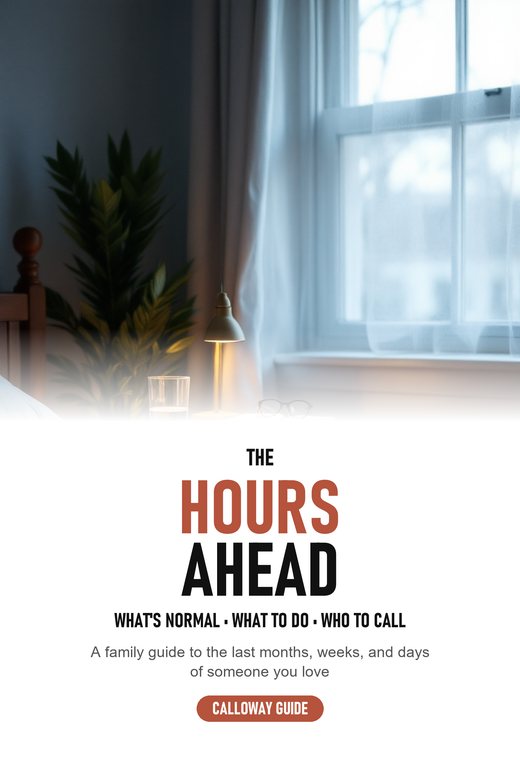
Cover of The Hours Ahead, a CallowayGuides publication
THE HOURS AHEAD

Keep the answers close.

228 pages · 14 chapters
Read on any device

Came here from a video? Keep watching. The free videos and the booklets from your hospice are good, and this guide doesn't replace them. It puts the answers in order, so you can look them up in the moment. Please know that no nurse wrote this guide.

The questions that come up when no one is in the room to ask

1

What does that breathing mean?

It speeds up, slows down, and stops for a while. Or there is a wet sound with each breath, and you can't tell what you are hearing or whether to call. This chapter separates the sounds that can come with dying from a struggle to breathe.

Chapter 7: The Breathing and the Sounds.

2

The plate comes back untouched.

You may be afraid you are doing something wrong. You will find what is known, what isn't, what you can still offer, how to keep the mouth comfortable, and how to think about IV fluids if someone suggests them.

Chapter 6: When Eating and Drinking Stop.

3

This doesn't seem like them.

You may see pulling at the sheets, trying to get out of bed, or a look that doesn't know you. You will find what can be behind it, what to try in the room, and when to get your hospice team on the phone.

Chapter 8: Restlessness, Agitation, and Confusion.

4

Did the medicine do this?

A dose was given, or held back, and the question won't leave you alone. You will find what the research does and doesn't show, what to watch for, and what to ask. There are no doses in this guide. Your team sets those.

Chapter 9: Pain, Morphine, and the Medicines at Home.

5

I thought hospice would be here more.

Hospice brings a team, medicines, equipment, and a phone number someone answers at night. It does not usually put a person in your house around the clock. You will find what the team takes on, what stays with you, and what to do if no one calls back.

Chapter 1: What Hospice Does, and What Stays With You.

6

Who do I call first?

When someone dies at home, the first call depends on whether hospice is involved. You will find how to tell that death has happened, who to call, what happens next, and why you don't have to hurry.

Chapter 13: The Last Hours and the First Hour After.

You don't have to memorize any of this. You only have to know where to look.

An independent guide for families, compiled from cited published sources. Not written or reviewed by a healthcare professional, and not a substitute for your hospice team.

Get the guide · $27

The 90-Day No-Questions Refund. Secure checkout through Stripe.

What's inside

Start with Find It Fast, a list near the front organized by what you are seeing, hearing, or afraid of, with the chapter to turn to. The symptom chapters open with a short box called "If it's happening now," then go through what you may see, what it usually means, what you can do, and when to call.

  1. Chapter 1: What Hospice Does, and What Stays With You What the team brings, what falls to you between visits, how to turn and wash someone safely, the four levels of care, and what to do if no one calls back.
  2. Chapter 2: What Medicare Pays, What It Doesn't, and the Call to Make First Who pays for what, the call to make before the emergency room or an ambulance when no one is in immediate danger, and why nursing home room and board is a separate question.
  3. Chapter 3: When Something Is Wrong With the Care Keeping a record, changing to a different hospice, where to take a complaint, and what to do the same day if you are told the person no longer qualifies.
  4. Chapter 4: DNR, POLST, and Who Decides The documents side by side, who speaks for the person, and where to keep the papers so they can be found.
  5. Chapter 5: How Close Is It? The Signs From Months to Hours What often changes and when, the sudden good day that can confuse everyone, and why these signs can't give you a date.
  6. Chapter 6: When Eating and Drinking Stop What is known and what isn't, what to offer, mouth care, and the questions around IV fluids and artificial feeding.
  7. Chapter 7: The Breathing and the Sounds How to tell the sounds that can come with dying from a struggle to breathe, which needs a call right now.
  8. Chapter 8: Restlessness, Agitation, and Confusion What can be behind it, what you can try in the room, and when to get the team on the phone.
  9. Chapter 9: Pain, Morphine, and the Medicines at Home How pain shows without words, what the research on morphine does and doesn't show, and what to ask. No amounts, strengths, or schedules.
  10. Chapter 10: The Last Weeks With Cancer Weight that keeps falling, new confusion that may have a treatable cause, and asking for a written plan for sudden events.
  11. Chapter 11: The Last Stage of Dementia Pain that can't be put into words, eating and swallowing, the feeding tube question, and how hospice fits.
  12. Chapter 12: When the End Is Hard An honest chapter. It won't promise a peaceful ending. It tells you what to ask for, how to press, and what the levels of care are.
  13. Chapter 13: The Last Hours and the First Hour After Being there, not having been there, how to tell that death has happened, and who to call first, with hospice or without.
  14. Chapter 14: Carrying This: Exhaustion, Guilt, Family, and Grief Getting a break, brothers and sisters, what to say, wanting it to be over, and grief before and after.

Also in the guide

  • This Week: what is worth doing during a quiet hour, before you need it.
  • Words You May Hear: the terms your team may use, in plain language.
  • Appendix A: numbers to keep close.
  • Appendix B: questions for your team, gathered from the chapters.
  • All Sources: every published source, with its date.

An independent guide for families, compiled from cited published sources. Not written or reviewed by a healthcare professional, and not a substitute for your hospice team.

Download the guide · $27

The 90-Day No-Questions Refund. Secure checkout through Stripe.

Two companions

Cover of The Bedside Pages

The Bedside Pages

Printable PDF · 16 pages · optional, $7

Pages for writing down what you see and what you are told, kept in one folder by the bed and brought out when your hospice nurse visits. No medical advice and no doses are printed on them.

  • Symptom and Comfort Log
  • Mouth, Position, and Skin
  • Medication Record, left blank for what your team instructs
  • Medicines at a Glance
  • Questions for Each Visit
  • Paperwork Locator
  • Family Handoff Sheet
  • Concerns Log
  • Calls to Make After the Death

To add them, tick the box next to the price. The guide works without them.

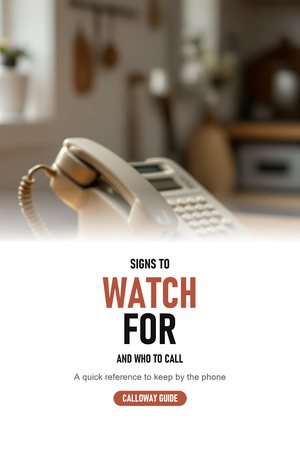
Cover of Signs to Watch For and Who to Call

Signs to Watch For and Who to Call

Printable PDF · free, with or without buying anything

The signs of the last weeks, days, and hours in plain words, who to call, and spaces for the phone numbers. Keep it where everyone in the house can see it.

We will email the checklist, then a few short follow-up emails. Every follow-up has an unsubscribe link. See our privacy notice.

One guide. A clear price.

The Hours Ahead
PDF guide, 228 pages
$27
The Bedside Pages
Printable PDF, 16 pages. Optional.
+ $7
Signs to Watch For and Who to Call
Free to anyone, separately from your purchase
Free
Your total$27, or $34 with The Bedside Pages

These are the only prices. There is no discount and no deadline.

An independent guide for families, compiled from cited published sources. Not written or reviewed by a healthcare professional, and not a substitute for your hospice team.

Buy the guide · $27

The 90-Day No-Questions Refund. Secure checkout through Stripe.

Who this is for

  • Husbands, wives, sons, daughters, and others caring for someone in the United States.
  • Care at home, in a nursing home, or from far away.
  • People who want to know plainly what may happen, including when it is hard.
  • Anyone who wants to look up the source and bring it to their team.

Who it isn't for

  • Anyone outside the United States.
  • Anyone looking for medication doses. There are none.
  • Anyone who wants the voice of a hospice clinician, or personal stories. There are no patient stories in it.
  • Anyone looking for spiritual teaching. It respects faith and custom, and it is a practical guide.
  • Anyone looking for a promise about how it will go. No one can make one.

Questions

Who wrote this?

CallowayGuides is a publishing name, not a person. There is no author's name or biography on this guide. No nurse, doctor, or other healthcare professional wrote or reviewed it, and we don't want you to assume otherwise.

An independent guide for families, compiled from cited published sources. Not written or reviewed by a healthcare professional, and not a substitute for your hospice team.

How the guide was prepared is stated in the note on its last page, under "About this book." If anything you read there changes your mind, ask for your money back. If you would rather read a book by a hospice clinician, that is a sound choice, and your hospice team may be able to suggest one.

I watch free videos, and my hospice gave me booklets. Why would I need this?

You may not. The free videos are good, and so are the booklets your hospice hands out. Keep using them. The videos give you an overview. The booklets cover their part. This guide puts the steps in one place, in order, so you can look something up in the moment instead of searching for the right video at night.

Much of the information behind it is public, and we say so. What you are paying for is having it gathered, organized, and sourced.

Does this replace my hospice team?

No. Use it alongside your team, never instead of them. If anything in it differs from what your team has told you, follow your team and ask them about the difference. Each chapter ends with questions to take to them, and Appendix B gathers those questions in one place.

Does it tell me how much medicine to give?

No. The guide gives no medication doses. Your hospice team sets those. It tells you what to watch for, what to ask, and when to call before you do anything else.

Can it tell me how long is left, or how it will go?

No, and no one can promise that. The signs in Chapter 5 can help you understand what you are looking at and ask better questions, but they can't give you a date. Some deaths are hard even with good care. The guide says so, and tells you what to ask for if that happens.

Where does the information come from?

From published sources, listed at the end of each chapter and gathered under All Sources at the back. They include Medicare and the Centers for Medicare & Medicaid Services, the National Institute on Aging, the National Cancer Institute, the American Cancer Society, MedlinePlus, the FDA, the Hospice Foundation of America, and National POLST. Where the sources don't settle something, the guide tells you. Some practical suggestions, such as how to press for help when a call isn't returned, are not drawn from a published source.

The guide is not affiliated with or endorsed by any of these organizations. This edition's information was checked in November 2026.

The person I'm caring for isn't on hospice yet, or has an illness other than cancer or dementia. Is it still useful?

It can be. The symptom chapters are organized around what you are seeing, not around one diagnosis, and the guide says what changes when someone isn't on hospice. Cancer and dementia each have their own chapter. Other illnesses do not. It also covers nursing homes and caring from far away.

How do I get it, and can I read it on my phone?

It is a PDF. After you pay, you go straight to a download page, and the link also comes to you by email. It opens on a phone, tablet, or computer, and you can print any page you want near the bed.

Is it for people outside the United States?

No. The phone numbers, Medicare rules, and legal forms are for the United States. Elsewhere they are different, so please ask your local care team instead.

What if it isn't what I needed?

The 90-Day No-Questions Refund covers you. Any time in the 90 days after you buy, reply to your delivery email and ask for your money back. We don't ask why, and we won't ask anything about the person you are caring for. You don't have to send or delete anything.

In one place, when you need it

  • Find It Fast, organized by what is in front of you.
  • What you may see, what you can do, and when to call.
  • Medicare, DNR and POLST, and what to do when the care falls short.
  • The first hour after a death, with hospice or without.
  • Questions for your team, and the sources behind the chapters.

The 90-Day No-Questions Refund

For 90 days after you buy, reply to your delivery email and ask for your money back. We won't ask why, and we won't ask anything about the person you are caring for.

An independent guide for families, compiled from cited published sources. Not written or reviewed by a healthcare professional, and not a substitute for your hospice team.

Keep it on your phone · $27

The 90-Day No-Questions Refund. Secure checkout through Stripe.